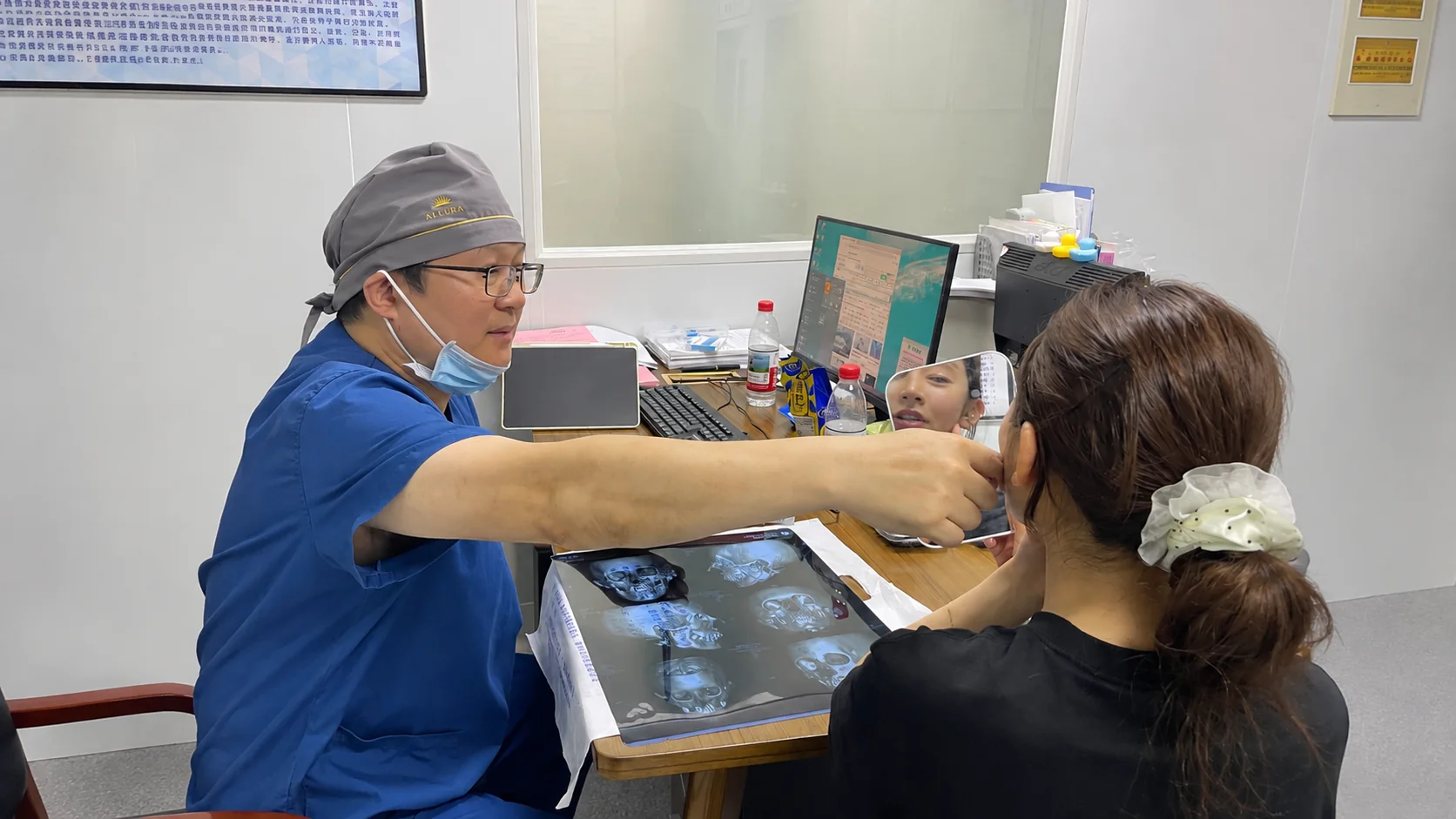
Every Facial Feminization Journey Begins Differently
For many people considering facial feminization surgery, the decision does not begin with a specific procedure.
It often begins with something much simpler:
“There are parts of my face that do not feel aligned with how I want to look.”
One person may be concerned about a prominent brow ridge.
Another may notice that their lower face appears wider or more angular than they would like.
Others may feel that several facial features—forehead, cheekbones, jawline, and chin—work together to create an overall appearance that feels too strong.
This is why facial feminization is rarely just about choosing a surgery from a list.
It is a process of understanding the face as a whole.
For international patients, that journey may begin thousands of kilometers away from the hospital, with photographs, questions, and an online consultation.
This article follows a typical facial feminization journey—from the first assessment to the gradual development of the final facial contour.

Step 1: Identifying the Facial Concerns
Before thinking about procedures, the first step is understanding what is actually creating the concern.
A patient may initially describe the problem in very general terms:
“My face looks too square.” “My forehead feels heavy.” “My lower face looks wide.” “I want my facial contour to look softer.” |
These descriptions are useful, but they do not yet explain the underlying anatomy.
For example, a wide lower face can result from several different structures:
- Prominent mandibular angles
- A wide mandibular body
- A broad chin
- Thick masseter muscles
- Soft-tissue volume
- A combination of these factors
Similarly, a strong upper face may be influenced by:
- Brow ridge projection
- Forehead slope
- Orbital structure
- Hairline position
- Temporal contour
The first task is therefore not to decide what surgery to perform, but to understand which anatomical structures are creating the appearance.
Looking at the Face From More Than One Angle
A single frontal photograph rarely tells the whole story.
During facial analysis, several views may be useful.
Front View
The front view helps evaluate:
- Overall facial width
- Facial symmetry
- Cheekbone width
- Jaw width
- Chin width
- Relationship between the upper, middle, and lower face
A patient who appears relatively balanced in profile may still have a noticeably broad lower face from the front.
Three-Quarter View
The three-quarter view often reveals information that is less obvious from the front.
It can show:
- Lateral cheekbone projection
- Mandibular angle prominence
- Jawline transitions
- Chin shape
- Relationship between facial width and projection
This angle is particularly useful when evaluating facial contouring.
Profile View
The profile provides a different set of information.
It can help assess:
- Forehead slope
- Brow ridge projection
- Nasal profile
- Chin projection
- Jaw position
- Overall facial convexity
A facial feature that appears wide from the front may have completely different projection when viewed from the side.
For this reason, a facial feminization plan should be created from a three-dimensional understanding of the face, rather than from one photograph.

Step 2: The Initial Facial Assessment
For international patients, the first consultation may take place remotely.
Patients may submit standardized facial photographs together with information about their concerns and treatment goals.
The purpose of this first assessment is not simply to recommend procedures.
It is to begin answering several important questions:
Which facial structures are contributing most strongly to the patient’s concerns?
Are those concerns primarily skeletal, soft-tissue related, or both?
Would changing one facial area affect the balance of another?
Which changes may provide the greatest improvement while maintaining a natural appearance?
This stage is especially important because patients often arrive with a specific procedure in mind.
For example, someone may initially believe they need only mandibular angle reduction.
However, facial analysis may show that the width of the chin also contributes significantly to the lower facial shape.
Another patient may be focused on the jaw while the forehead and brow ridge actually have a stronger influence on overall facial gender perception.
Good surgical planning therefore begins with diagnosis rather than procedure selection.

Step 3: Understanding the Facial Skeleton
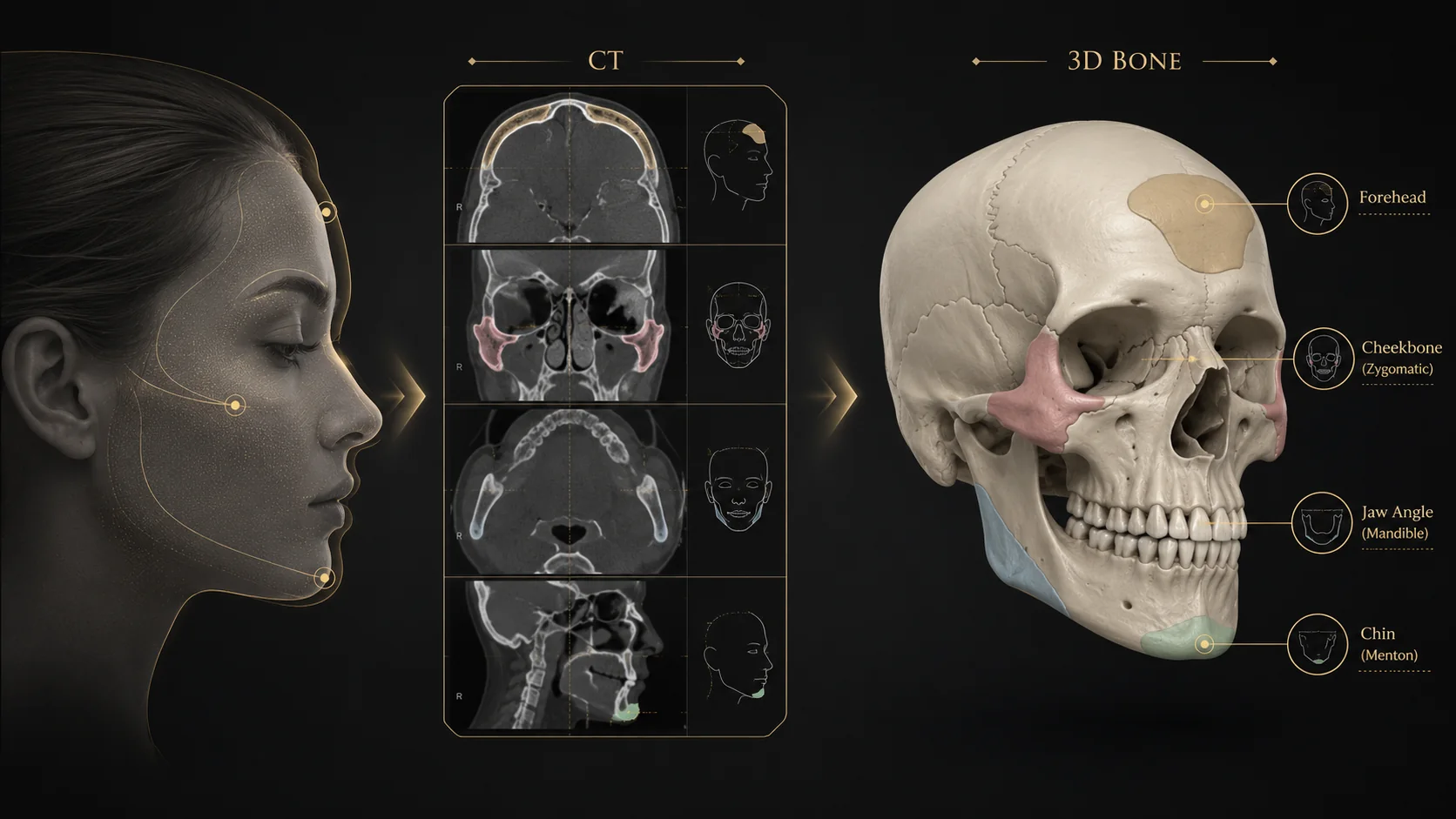
When facial bone surgery is being considered, the external appearance is only part of the assessment.
The surgeon also needs to understand the underlying bone structure.
CT imaging and three-dimensional skeletal reconstruction may be used to evaluate areas such as:
- Forehead
- Frontal sinus
- Zygomatic bones
- Zygomatic arches
- Mandible
- Mandibular angles
- Chin
- Important nerve pathways
This is where the surgical plan becomes more precise.
Two patients may have similar-looking facial contours externally but very different skeletal anatomy.
For example, two prominent brow ridges may look similar on photographs while having different frontal sinus structures.
Likewise, two wide lower faces may result from very different mandibular shapes.
The surgical plan must therefore be based on the individual anatomy rather than appearance alone.
Step 4: Deciding What Should — and Should Not — Be Changed
One of the most important moments in the consultation is deciding which areas actually need treatment.
Facial feminization should not be treated as a checklist.
A patient does not automatically need:
- Forehead contouring
- Cheekbone surgery
- Jaw reduction
- Chin surgery
- Rhinoplasty
simply because these procedures are commonly associated with FFS.
Some patients may benefit from only one or two structural changes.
Others may have several areas that contribute to the overall appearance.
The aim is not to perform the maximum number of procedures.
The aim is to identify the minimum combination of meaningful changes needed to create better facial balance.
This distinction matters.
More surgery does not automatically produce a more feminine or more attractive result.
A Common Concern: “I Want My Face to Be Smaller”
Many patients initially describe their goal as wanting a “smaller face.”
But facial feminization is more complex than simply reducing facial size.
Imagine a patient with:
- Prominent cheekbones
- Wide mandibular angles
- A broad chin
Aggressively narrowing only the jaw may make the cheekbones look even wider.
Likewise, making the chin extremely narrow may create an artificial V-shaped lower face that does not match the midface.
The goal is therefore not:
maximum reduction
but rather:
balanced proportion.
Sometimes reducing several areas moderately creates a more natural result than aggressively reducing one structure.
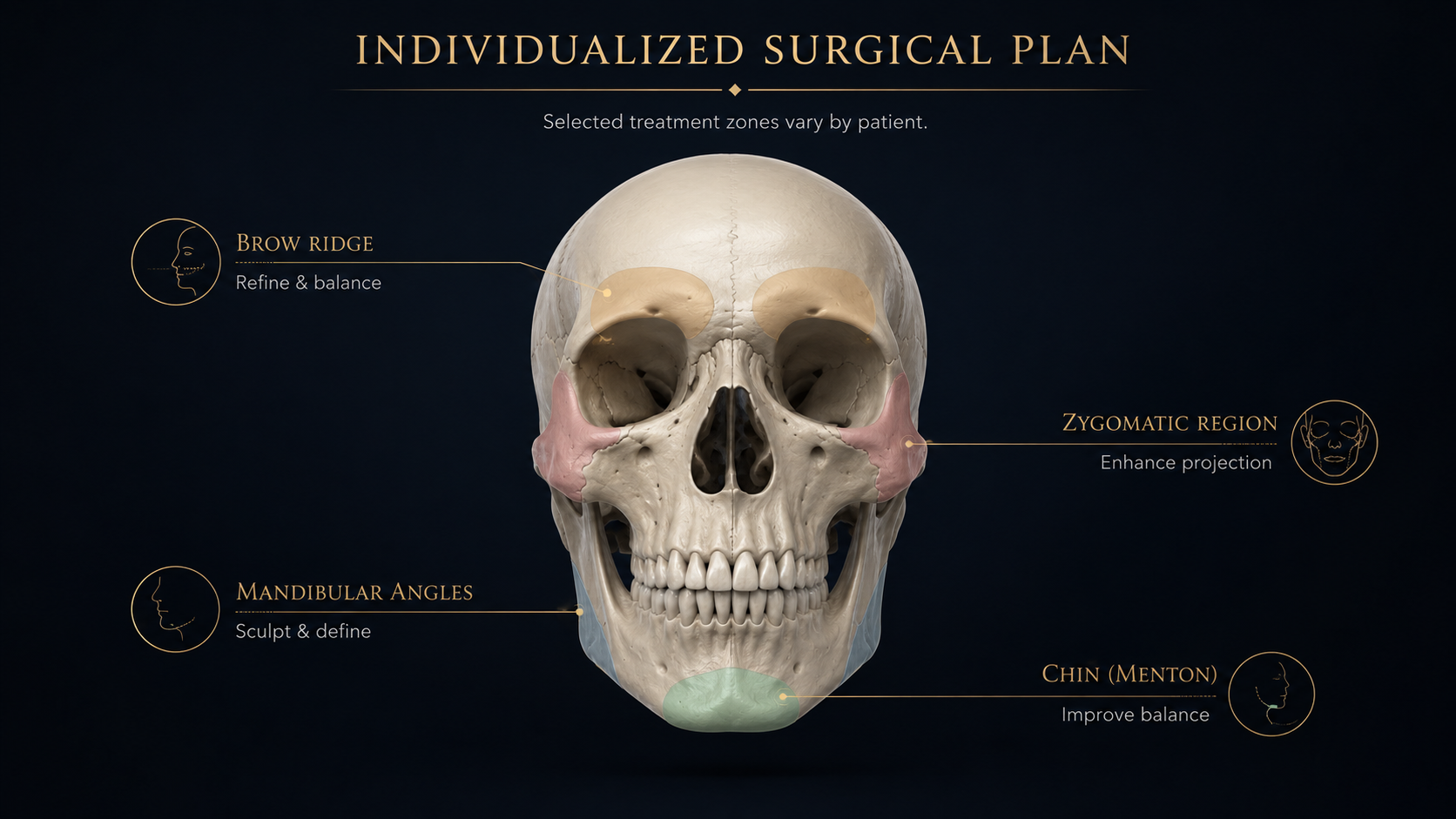
Step 5: Creating an Individualized Surgical Plan
Once the anatomy and priorities are understood, a surgical plan can be created.
Depending on the patient, a facial feminization plan may involve procedures such as:
- Forehead and brow bone contouring
- Zygomatic contouring
- Mandibular angle reduction
- Jawline contouring
- Chin reshaping
- Rhinoplasty
- Hairline-related procedures
- Selected soft-tissue procedures
The important point is that these procedures should not be planned independently.
Each structural change influences how the rest of the face is perceived.
For example:
Forehead → Eyes → Nose
form one visual relationship.
Meanwhile:
Cheekbones → Jawline → Chin
form another.
The surgical plan should therefore consider how each change contributes to the final facial shape.
Before Surgery: Preparing for the Procedure
Once the surgical plan is confirmed, attention shifts from analysis to preparation.
Patients may undergo:
- Medical history review
- Physical examination
- Blood tests
- Imaging
- Anesthesia assessment
- Medication review
- Preoperative photography
Patients should inform the medical team about:
- Current medications
- Supplements
- Previous surgeries
- Allergies
- Smoking or nicotine use
- Existing medical conditions
Preoperative instructions vary depending on the procedures being performed.
For international patients, this stage also includes practical planning.
The International Patient Experience
Traveling abroad for surgery adds another layer to the patient journey.
In addition to the operation itself, patients need to consider:
- Flights
- Visa requirements where applicable
- Accommodation
- Transportation
- Hospital admission
- Communication
- Postoperative follow-up
- Recovery time before flying home
For facial bone surgery, patients should generally avoid creating an excessively tight travel schedule.
Surgery is only one part of the process.
Adequate time should also be reserved for early recovery and postoperative assessment.

The Day of Surgery
On the day of surgery, the patient undergoes final preoperative preparation and review.
The surgical team confirms:
- Planned procedures
- Surgical areas
- Relevant imaging
- Medical information
- Anesthesia plan
For multi-area facial feminization surgery, several facial structures may be treated during the same operation.
However, the exact combination depends on the patient’s anatomy and treatment plan.
Throughout the procedure, the objective is not simply bone removal.
The surgeon must consider:
- Structural continuity
- Symmetry
- Nerve anatomy
- Bone thickness
- Smooth transitions
- Overall facial proportions
This is especially important in facial contouring procedures.
The First Few Days After Surgery
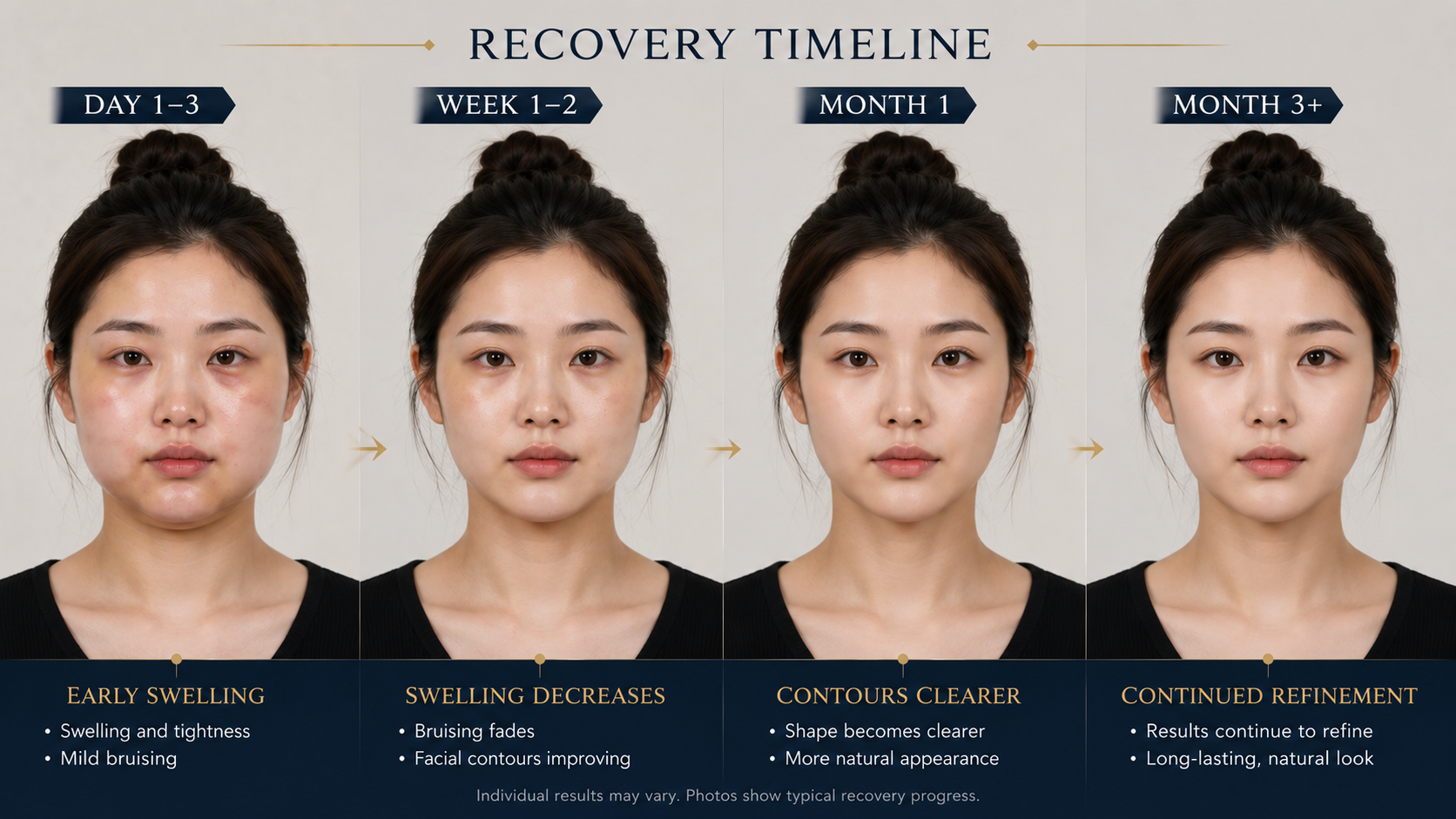
The early postoperative period often looks very different from the final result.
Swelling is expected.
Depending on the procedures performed, patients may experience:
- Facial swelling
- Bruising
- Tightness
- Temporary numbness
- Difficulty chewing
- General postoperative discomfort
For patients who undergo several facial bone procedures together, swelling may involve multiple areas of the face.
It is important to understand that the face at this stage does not represent the final contour.
In fact, the early face may temporarily look wider or less defined because of swelling.
This can be emotionally challenging for patients who have spent a long time preparing for surgery.
Understanding the recovery timeline beforehand can help set realistic expectations.
The First Week: Recovery Becomes the Main Focus
During the first week, recovery becomes the patient’s primary task.
Patients may need to:
- Rest
- Follow medication instructions
- Maintain appropriate oral hygiene
- Follow dietary recommendations
- Avoid strenuous activity
- Attend postoperative examinations
When jaw or chin surgery is involved, softer foods may be recommended during early recovery.
Swelling may not decrease evenly.
One side of the face can temporarily appear more swollen than the other.
This does not automatically mean the final result will be asymmetric.
Early postoperative appearance is strongly influenced by inflammation and tissue swelling.
Week Two: The Face Begins to Change
As early swelling gradually decreases, patients often begin to see the first suggestion of the new facial structure.
The face may still look swollen, but certain changes may begin to become more apparent.
For example:
- Jawline width may begin to decrease
- Forehead contours may look smoother
- Chin shape may become more visible
- Facial transitions may begin to look softer
However, this is still an early stage.
Patients should avoid judging the final outcome based on the appearance during the first several weeks.
The First Month: Contours Become Easier to See
By around the first month, significant early swelling may have improved.
The face often begins to look more familiar and socially natural.
However, subtle swelling can remain.
This is particularly common in areas that have undergone extensive skeletal modification.
At this stage, patients may start seeing how individual changes work together.
Instead of focusing only on:
the patient may begin noticing:
“My cheekbones, jawline, and chin now feel more balanced together.” |
That shift is important.
Successful facial feminization is usually experienced as a change in overall harmony, not simply as a collection of isolated surgical changes.
Three Months and Beyond: The Face Continues to Refine
Healing does not stop after the first month.
Residual swelling can continue to resolve over several months.
The soft tissue gradually adapts to the new skeletal framework.
As this happens:
- Jawlines may become more defined
- Chin contours may appear clearer
- Upper facial swelling continues to improve
- Facial proportions become easier to evaluate
Patients who underwent multiple procedures may notice that different areas settle at different speeds.
This is normal.
Final results should therefore be judged over time.
The Emotional Side of Facial Surgery
Physical recovery is only one part of the patient journey.
Facial surgery can also involve a period of psychological adjustment.
The face is deeply connected to identity.
Even when the changes are desired, seeing a different facial structure in the mirror can take time to become familiar.
During early recovery, swelling can further complicate this experience.
Patients may move through different reactions:
- Excitement
- Anxiety
- Impatience
- Uncertainty
- Gradual adaptation
This is another reason why realistic expectations are important before surgery.
The result does not appear instantly.
It develops as the tissues heal and the patient gradually adapts to the new facial proportions.
When Does the Result Start to Feel “Natural”?
There is no universal point at which every patient feels fully recovered.
Physical healing and emotional adjustment vary.
However, as swelling decreases and daily life returns to normal, the new facial contour usually begins to feel less like a postoperative change and more like part of the patient’s natural appearance.
This process may happen gradually.
A patient may first notice the difference in photographs.
Later, they may notice it in profile.
Eventually, they may stop actively analyzing each individual feature.
The face simply begins to feel more cohesive.
What Makes a Successful Facial Feminization Journey?
Success should not be measured only by how much the face changed.
Several principles are more important.
Natural Proportion
The forehead, cheekbones, jawline, and chin should relate naturally to each other.
Structural Continuity
Transitions between treated and untreated areas should remain smooth.
Individual Identity
The patient should remain recognizable as themselves.
Appropriate Degree of Change
The amount of modification should reflect individual anatomy rather than a standard template.
Realistic Expectations
Patients should understand both the possibilities and limitations of surgery.
These principles are more meaningful than simply asking whether a face became “smaller.”
What Patients Often Learn During the Process
One of the most important lessons of facial feminization is that the feature a patient initially focuses on is not always the only structure influencing the face.
A concern about the jaw may actually involve the chin.
A concern about the eyes may partly result from brow bone projection.
A concern about facial width may involve both the cheekbones and mandible.
This is why comprehensive facial analysis matters.
The face should be treated as a connected three-dimensional structure.
Frequently Asked Questions
Facial Feminization Is a Journey, Not a Single Moment
The transformation associated with facial feminization surgery does not happen only in the operating room.
It begins with understanding the face.
Then comes anatomical analysis, surgical planning, preparation, surgery, recovery, and gradual adaptation.
The final result develops over time.
For many patients, the most meaningful change is not simply that one feature becomes smaller.
It is that the face begins to feel more balanced as a whole.
That is why an individualized approach matters.
Every facial structure is different.
And every facial feminization journey should begin with the same question:
What changes are appropriate for this particular face?
Facial Feminization Is a Journey, Not a Single Moment
For international patients considering facial feminization surgery, an initial facial assessment can help clarify:
- Which structures contribute most to your concerns
- Whether the issue involves bone, soft tissue, or both
- Which procedures may be appropriate
- Whether multiple procedures should be combined
- What recovery may involve
- How to plan travel and postoperative follow-up