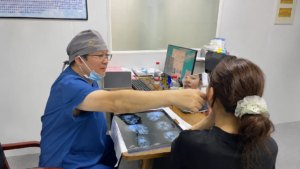
How a Facial Bone Surgery Plan Is Created
Facial bone surgery should never begin with a simple question such as:
“Which bone should be made smaller?”
A good surgical plan begins much earlier.
Before deciding whether a patient needs brow bone reduction, cheekbone contouring, mandibular angle reduction, chin reshaping, or a combination of procedures, the surgeon first needs to understand the structure of the entire face.
That means looking at:
- Facial width
- Facial height
- Projection
- Symmetry
- Bone structure
- Soft-tissue thickness
- Relationship between facial regions
- The patient’s own treatment priorities
The goal is not to apply one standard facial shape to every patient.
The goal is to determine which structures are influencing the facial appearance most strongly and how they can be modified while maintaining balance and individual identity.
This article explains how an individualized facial bone surgery plan is created—from the first photographs to three-dimensional skeletal analysis and final procedure selection.
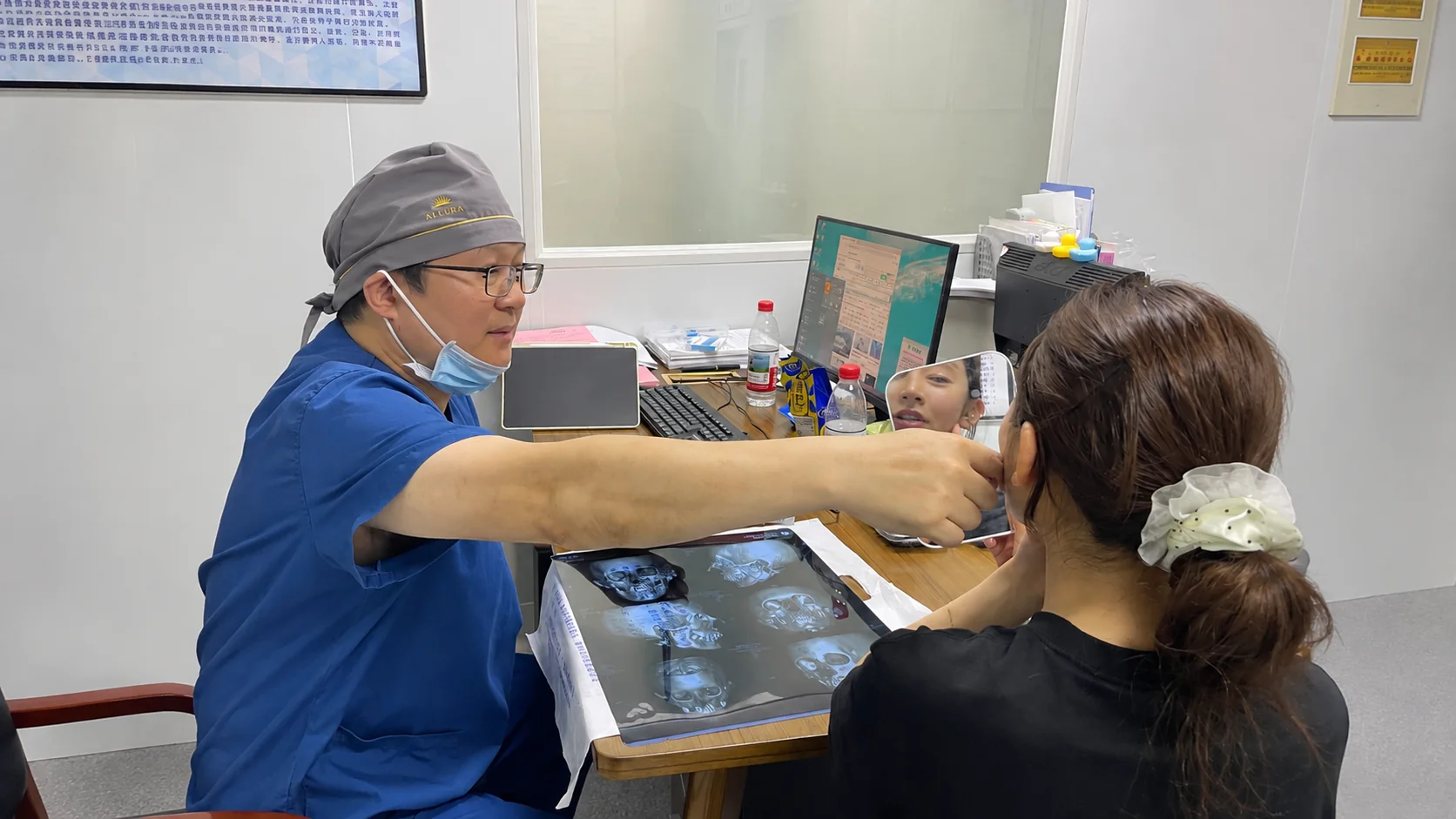
Step 1: Start With the Patient’s Concerns
The first part of surgical planning is not the CT scan.
It is understanding what the patient actually wants to change.
Patients may describe concerns in simple terms such as:
- “My jaw looks too wide.”
- “My brow bone is too prominent.”
- “My cheekbones make my face look broad.”
- “My chin looks too square.”
- “My face looks too angular.”
- “I want a softer facial contour.”
These descriptions are important because they identify the patient’s priorities.
However, the visible concern and the anatomical cause are not always the same.
For example:
A patient may believe the jaw is the main reason the lower face looks wide.
But analysis may show that the chin is also broad.
Another patient may focus on cheekbone width, while the overall facial balance is influenced by both the zygomatic arch and mandibular angle.
This is why consultation should begin with the patient’s perception, but surgical planning must continue with anatomical analysis.
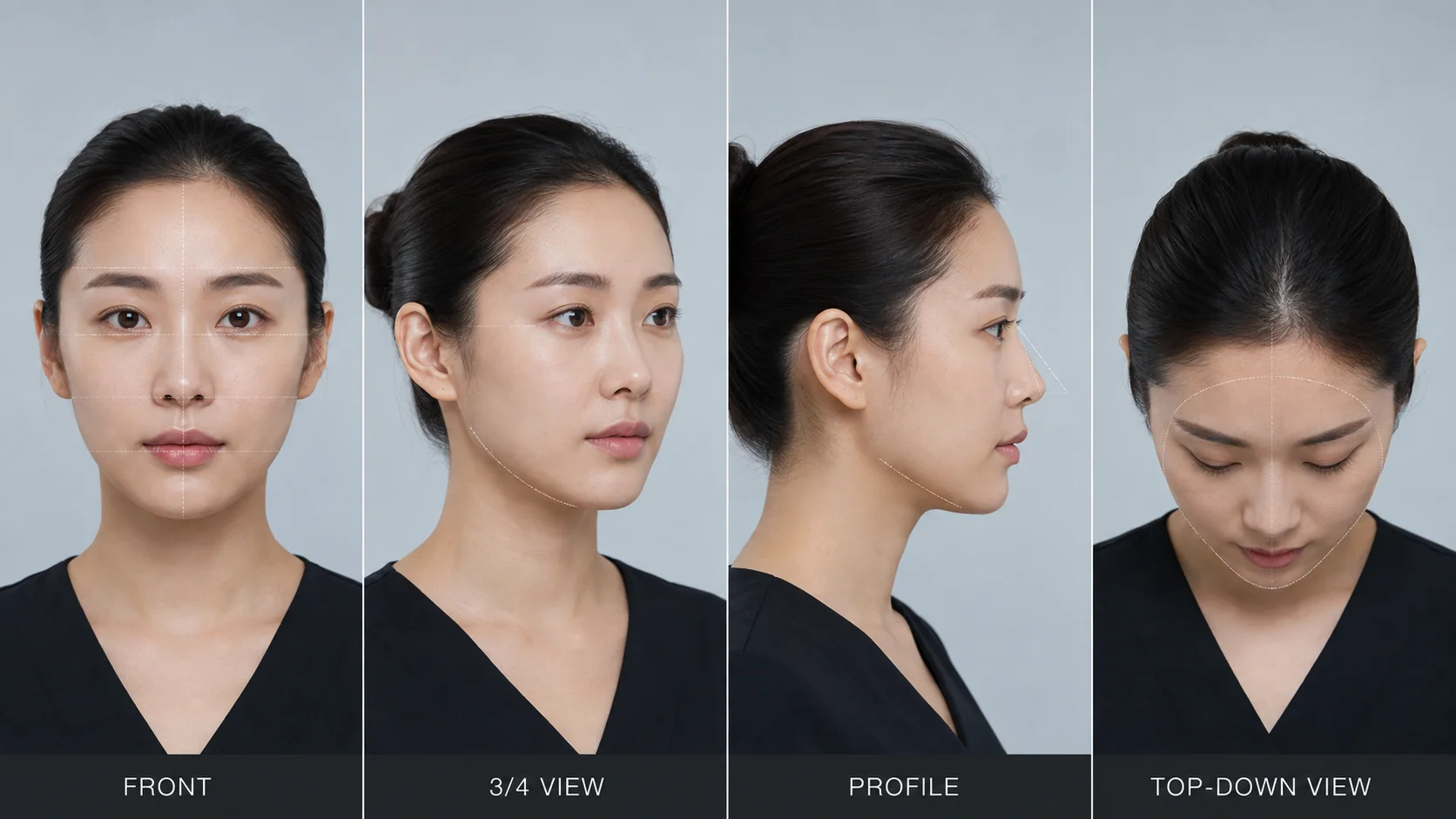
Step 2: Standardized Facial Photography
Photographs are one of the most important tools in facial analysis.
Casual selfies are often not sufficient because:
- Camera distance changes facial proportions
- Wide-angle lenses distort the face
- Head position affects symmetry
- Lighting can exaggerate or hide projection
- Different expressions change soft-tissue appearance
For surgical planning, standardized photographs are more useful.
The patient is usually photographed from several angles.
Front View
The front view helps evaluate:
- Overall facial width
- Facial symmetry
- Cheekbone width
- Jaw width
- Chin width
- Relationship between upper, middle, and lower facial thirds
This is particularly useful when assessing whether facial width comes mainly from the cheekbones, mandible, chin, or a combination of structures.
Three-Quarter View
The three-quarter view combines information about width and projection.
It can reveal:
- Zygomatic projection
- Mandibular angle prominence
- Facial curvature
- Jaw-to-chin transition
- Brow projection
- Midface depth
This angle is extremely useful in facial contouring because many skeletal features are more obvious at 45 degrees than they are directly from the front.
Profile View
The profile provides information about:
- Forehead slope
- Brow ridge projection
- Nasal relationship
- Chin projection
- Jaw position
- Facial convexity
- Vertical facial proportions
A face can appear wide from the front while having very different projection from the side.
This is why one angle alone cannot provide enough information for surgical planning.
Step 3: Divide the Face Into Structural Regions
After reviewing the overall facial shape, the surgeon can analyze the face by region.
A practical way to think about the facial skeleton is:
Upper Face
- Forehead
- Brow bone
- Orbital region
Midface
- Zygomatic body
- Zygomatic arch
Lower Face
- Mandibular angles
- Jawline
- Chin
However, these areas should not be treated independently.
The appearance of one region changes how the others are perceived.
For example:
A narrow jaw can make the cheekbones appear more prominent.
A broad chin can make the lower face remain wide even after mandibular angle reduction.
A prominent brow ridge can make the eyes appear deeper even when the eyes themselves are unchanged.
This relationship between facial regions is one of the most important principles of facial bone surgery.
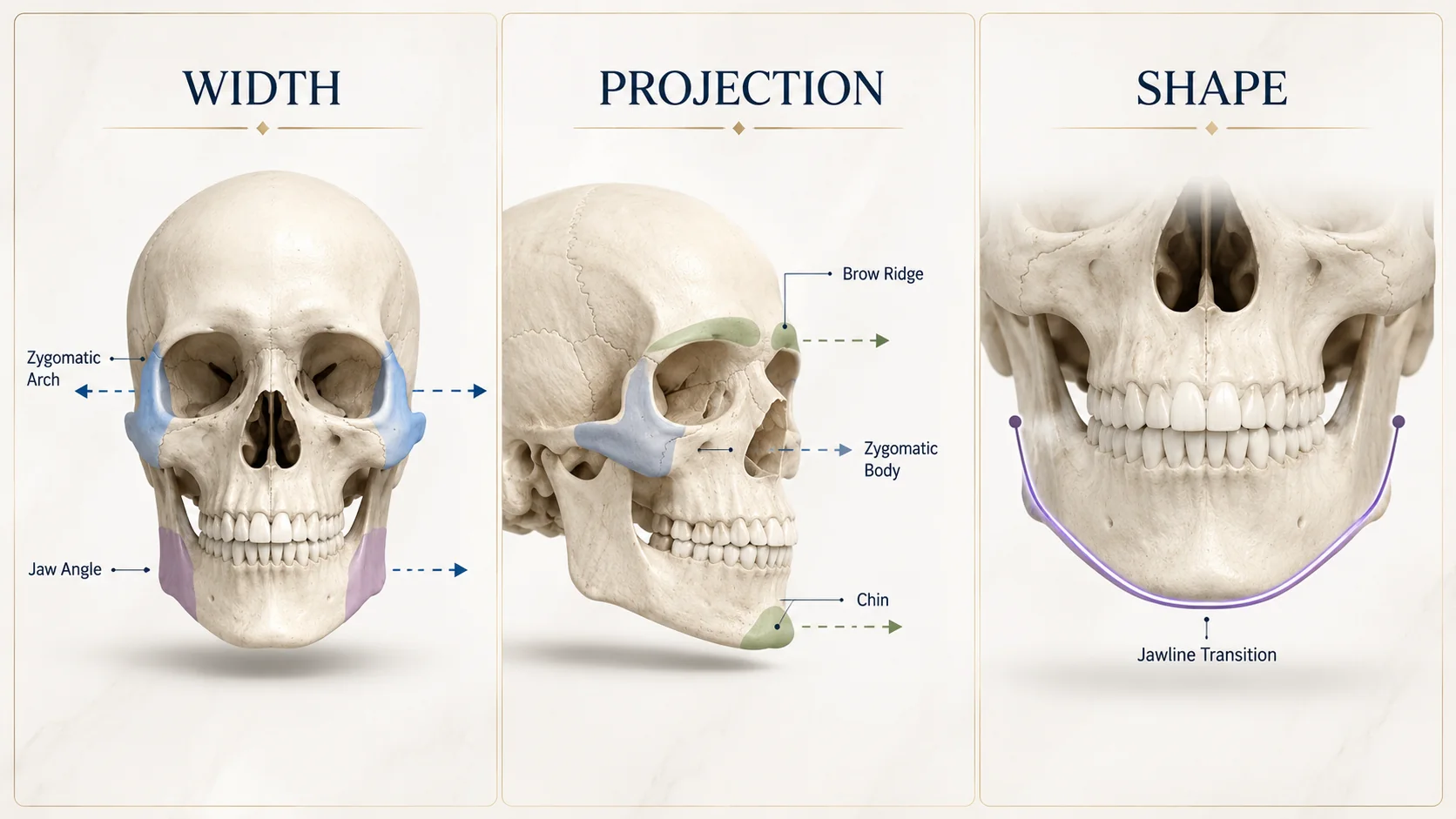
Step 4: Determine Whether the Concern Is Width, Projection, Height, or Shape
One of the biggest mistakes in facial contouring is treating every concern as a “size” problem.
Facial structure is three-dimensional.
A bone can be prominent because of:
- Width
- Forward projection
- Vertical height
- Angularity
- Shape
- Asymmetry
These require different surgical strategies.
Facial Width
Width is usually assessed from the front.
Important structures include:
- Zygomatic arches
- Mandibular angles
- Chin width
A wide face does not necessarily mean every one of these structures is wide.
The surgeon needs to identify where the width actually comes from.
Forward Projection
Projection is easier to understand from the profile and three-quarter view.
Examples include:
- Brow ridge projection
- Anterior cheekbone projection
- Chin projection
Projection should not automatically be reduced.
For example, appropriate anterior cheekbone projection may support a youthful and balanced midface.
Vertical Height
Vertical proportions also influence facial shape.
Important measurements may involve:
- Forehead height
- Midface height
- Chin height
- Overall facial length
A long chin and a wide chin are different concerns and should not be treated in the same way.
Shape and Angularity
A facial structure may not be excessively large but may have a shape that appears more angular.
Examples include:
- Square chin
- Prominent mandibular angle
- Strong brow ridge
- Abrupt jawline transitions
Surgical planning therefore requires more than simple measurements.
Step 5: Evaluate the Bone Beneath the Soft Tissue
Surface appearance does not always reveal the exact skeletal structure underneath.
Soft tissue can change how bone shape appears.
Factors include:
- Facial fat
- Muscle thickness
- Skin thickness
- Age
- Soft-tissue elasticity
For example, a wide lower face may be caused partly by the mandibular bone and partly by thick masseter muscles.
Similarly, the shape of the cheek may not correspond exactly to the shape of the underlying zygomatic bone.
This is why physical examination and imaging can be important.
The surgeon must determine whether the patient’s concern is primarily:
skeletal
or
soft-tissue related
or a combination of both.
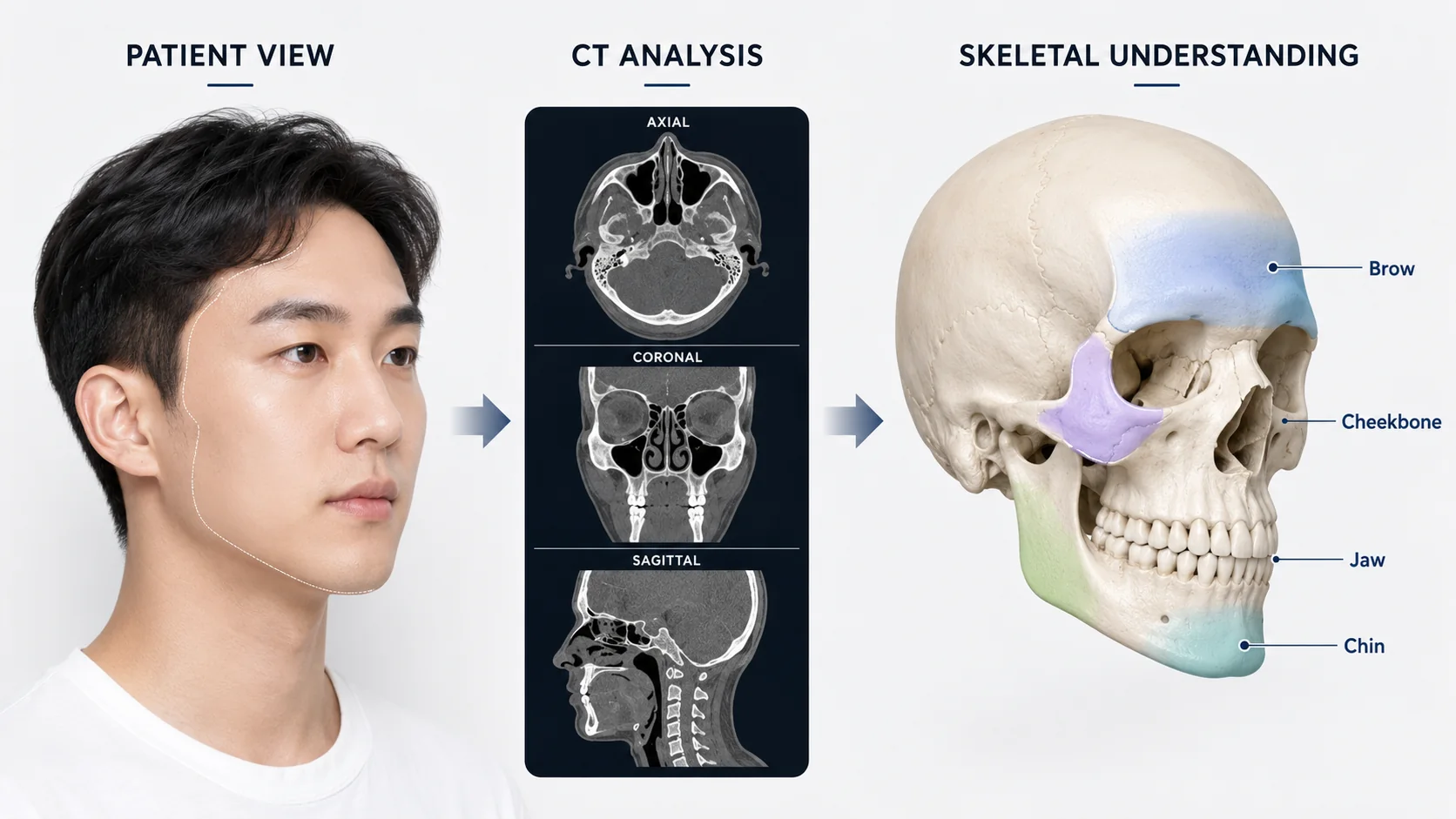
Step 6: CT Imaging and 3D Bone Reconstruction
For significant facial bone surgery, CT imaging can provide information that photographs cannot.
CT allows the surgeon to evaluate the actual skeletal anatomy beneath the soft tissues.
It can provide information about:
- Bone thickness
- Skeletal asymmetry
- Frontal sinus anatomy
- Zygomatic shape
- Mandibular structure
- Chin anatomy
- Nerve pathways
- Previous fractures or surgery
Three-dimensional reconstruction can make these relationships easier to visualize.
Why CT Matters for Forehead Surgery
The frontal sinus is located behind part of the forehead and brow region.
Its size and position vary significantly between individuals.
Two patients may have similar-looking brow ridges externally but very different internal bone structures.
CT imaging can help determine:
- Frontal sinus boundaries
- Bone thickness
- Brow ridge anatomy
- Potential limits of contouring
Why CT Matters for Jaw Surgery
Important sensory nerves travel through the mandible.
The inferior alveolar nerve runs inside the lower jaw and exits through the mental foramen near the chin.
Its position needs to be considered when planning:
- Mandibular angle reduction
- Jawline contouring
- Chin surgery
This is why facial bone surgery should be based on actual anatomy rather than simply drawing a desired external contour.
Step 7: Analyze Each Potential Treatment Area
Once the overall facial proportions and skeletal anatomy are understood, each potential surgical area can be evaluated individually.
Forehead and Brow Bone
The surgeon may evaluate:
- Brow ridge projection
- Forehead slope
- Frontal sinus
- Orbital rim
- Nasofrontal transition
The objective is not always maximum reduction.
The goal is to create a smoother upper facial contour while maintaining natural forehead curvature.
Zygomatic Region
Cheekbone analysis should distinguish between:
- Zygomatic body
- Zygomatic arch
- Lateral width
- Forward projection
A patient with excessive lateral arch width may require a different approach from someone whose concern is anterior cheek prominence.
Cheekbone surgery should also consider the role of the zygomatic structure in supporting facial soft tissues.
Mandibular Angle and Jawline
Lower-face analysis may include:
- Mandibular angle width
- Mandibular body
- Lower border
- Jawline curvature
- Relationship with the chin
Reducing only the posterior jaw angle may not create a smooth result if the rest of the mandibular body remains wide.
The entire contour from the angle toward the chin should therefore be considered.
Chin
The chin may be evaluated according to:
- Width
- Height
- Projection
- Shape
- Symmetry
A wide chin and a long chin require different treatment strategies.
The chin also needs to fit naturally with the jawline.
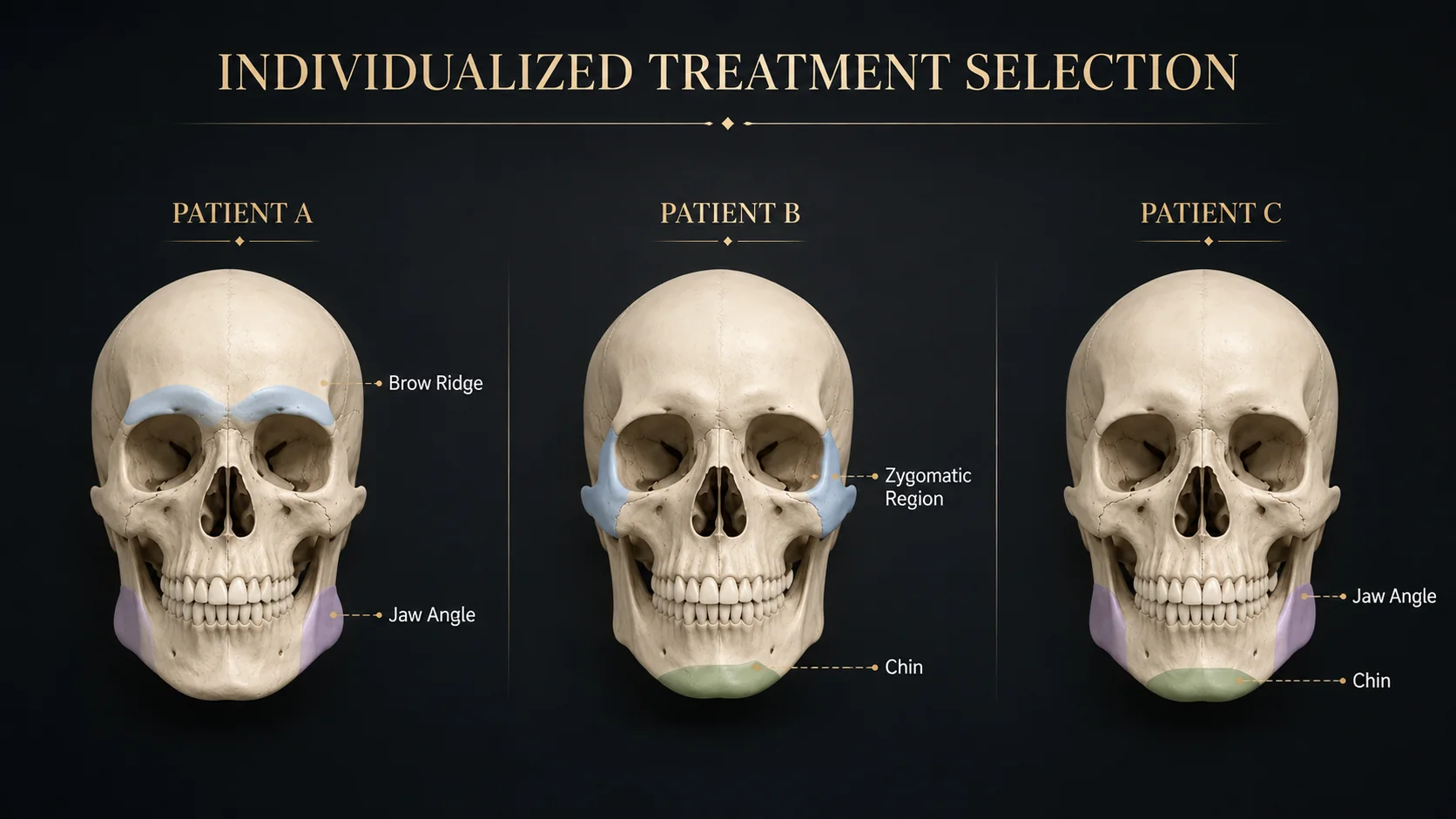
Step 8: Decide Which Areas Actually Need Surgery
After completing the analysis, the surgeon must decide what should be treated—and what should be left alone.
This is an important step.
Facial bone surgery should not become:
“Forehead + cheekbone + jaw + chin for every patient.” |
Some patients may require only:
Others may benefit from:
Another patient may require:
- Cheekbone + jawline treatment
The correct combination depends on the individual facial anatomy.
The objective is not maximum surgery.
The objective is targeted surgery.
Step 9: Balance the Face Rather Than Maximize Reduction
This is one of the most important parts of planning.
A common patient request is:
“Make my face as small as possible.”
But maximum reduction does not necessarily produce the best result.
For example:
If the jaw becomes extremely narrow while the cheekbones remain broad, the face may look unbalanced.
If the chin is narrowed too aggressively, the lower face may look artificially pointed.
If the cheekbones are reduced too much, the midface may lose important structural support.
Good planning therefore focuses on:
- Proportion
- Transition
- Continuity
- Natural shape
rather than simply removing the maximum amount of bone.
The Jawline Should Be One Continuous Curve
One example of this principle is mandibular contouring.
The jaw should not be treated as isolated segments.
A natural lower facial contour should create a smooth transition from:
Mandibular angle → Jaw body → Chin
If one segment changes too abruptly, the result may appear irregular.
The surgical plan must therefore anticipate the final contour before bone modification begins.
Step 10: Evaluate Symmetry
Perfect human facial symmetry does not exist.
Most people have natural differences between the left and right sides.
These may involve:
- Cheekbone height
- Jaw width
- Chin position
- Brow projection
- Facial height
The goal of facial surgery is usually not mathematical perfection.
Instead, the surgeon may try to improve significant asymmetry while preserving natural facial character.
CT and three-dimensional imaging can help identify whether visible asymmetry comes from:
- Bone
- Soft tissue
- Position
- Combination of factors
Step 11: Consider the Soft Tissue After Bone Reduction
The skeleton is only part of the final result.
The soft tissues must adapt to the modified bone structure.
This includes:
- Skin
- Fat
- Muscle
- Ligaments
- Connective tissue
This is especially important when significant skeletal reduction is being considered.
For example, aggressively reducing cheekbone or jaw width changes the support beneath the soft tissue.
Age and skin elasticity may therefore influence surgical planning.
The question is not simply:
“Can this bone be reduced?”
but also:
“How will the surrounding tissue respond after the bone is changed?”
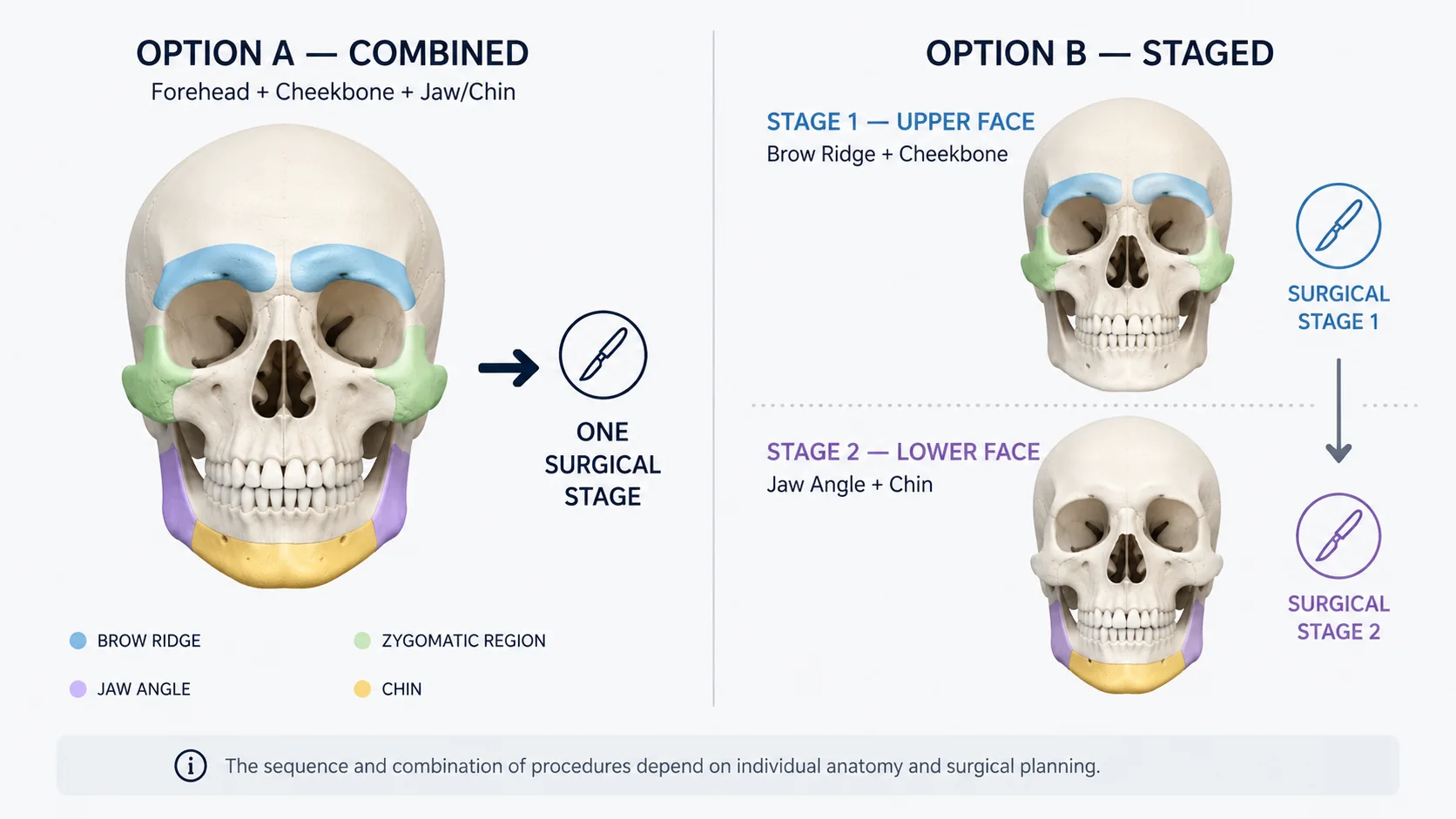
Step 12: Decide Whether Procedures Should Be Combined or Staged
Some patients may undergo multiple procedures during the same surgical session.
Examples include:
- Forehead + jawline
- Cheekbone + jawline
- Jawline + chin
- Forehead + cheekbone + jawline + chin
However, more procedures create a longer operation and potentially more extensive recovery.
The decision may depend on:
- Overall health
- Number of treatment areas
- Surgical complexity
- Anesthesia duration
- Expected blood loss
- Recovery considerations
- Patient priorities
In some cases, combining procedures may make sense.
In others, staged surgery may be more appropriate.
Step 13: Review the Plan With the Patient
The final surgical plan should be discussed clearly before surgery.
Patients should understand:
- Which areas are being treated
- Why those areas were selected
- Which areas are not being treated
- Expected degree of change
- Limitations
- Recovery
- Risks
- Alternatives
This conversation is particularly important because patients and surgeons may use different words to describe the same facial feature.
For example:
A patient may ask for a “V-line.”
But the surgeon needs to determine whether that means:
- Narrower mandibular angles
- Narrower chin
- Shorter chin
- Smoother jawline
- Some combination of these
Clear communication reduces misunderstanding.
What Makes a Good Facial Bone Surgery Plan?
- A good surgical plan should satisfy several principles.
- Anatomically Appropriate
- It should reflect the patient’s actual bone structure.
- Proportionate
- Each treated region should remain balanced with the rest of the face.
- Individualized
- The treatment should not follow a standard template.
- Technically Realistic
- The plan must respect anatomical and surgical limitations.
- Safety-Focused
- Nerves, bone thickness, sinus anatomy, and other structures must be considered.
- Natural
- The goal should be a coherent facial contour rather than an over-operated appearance.
Common Planning Mistakes
The Best Surgical Plan Is Not the Biggest Surgical Plan
Facial bone surgery should not be measured by the number of procedures performed.
A successful plan is one that identifies:
- Which structures matter
- Which structures do not need treatment
- How much change is appropriate
- How each area affects the others
The most important question is not:
“How many procedures can be performed?”
It is:
“Which combination of changes will create the most balanced result for this individual face?”
That is the foundation of individualized facial bone surgery planning.
Considering Facial Bone Surgery?
- A detailed assessment can help determine:
- Which facial structures contribute most to your concerns
- Whether the issue involves width, projection, height, or shape
- Whether CT imaging is recommended
- Which procedures may be appropriate
- Whether procedures should be combined or staged
- What degree of change may be realistic