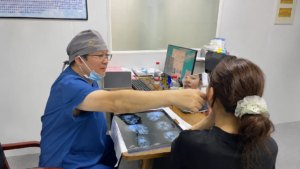
Recovery after facial bone surgery is not a single event.
It is a gradual process.
Whether surgery involves the forehead, cheekbones, jawline, chin, or several areas together, the face needs time to recover from swelling, tissue changes, and skeletal modification.
One of the most important things patients can understand before surgery is this:
The face seen during the first few days is not the final result.
In fact, early swelling can temporarily make the face appear wider, fuller, or less defined than it did before surgery.
As healing progresses, swelling decreases and the underlying facial contour becomes easier to see.
This article explains the typical stages of recovery after facial bone surgery and what patients may experience from the first postoperative days through the following months.

Why Recovery Looks Different for Every Patient
There is no single recovery timeline that applies perfectly to everyone.
Recovery can vary according to:
- The procedures performed
- Number of facial areas treated
- Degree of skeletal modification
- Surgical technique
- Individual swelling response
- Age
- Skin and soft-tissue characteristics
- General health
- Postoperative care
A patient undergoing one isolated facial bone procedure may recover differently from a patient undergoing several procedures during the same operation.
For example, someone having only forehead contouring may experience a different pattern of swelling from someone undergoing zygomatic, jawline, and chin contouring together.
Because of this, recovery timelines should be understood as general stages rather than fixed deadlines.
The First 24 Hours After Surgery
The first day is primarily about monitoring and early recovery from surgery and anesthesia.
Patients may feel:
- Sleepy
- Tired
- Tightness in the face
- Pressure or fullness
- Mild to moderate discomfort
- Numbness in certain areas
Swelling usually begins soon after surgery.
Depending on the procedures performed, it may involve:
- Forehead
- Eyelids
- Cheeks
- Jawline
- Chin
The medical team monitors the patient during this period and provides instructions regarding medication, hydration, positioning, and early postoperative care.
For patients undergoing more extensive facial bone surgery, hospital observation may be recommended depending on the treatment plan.

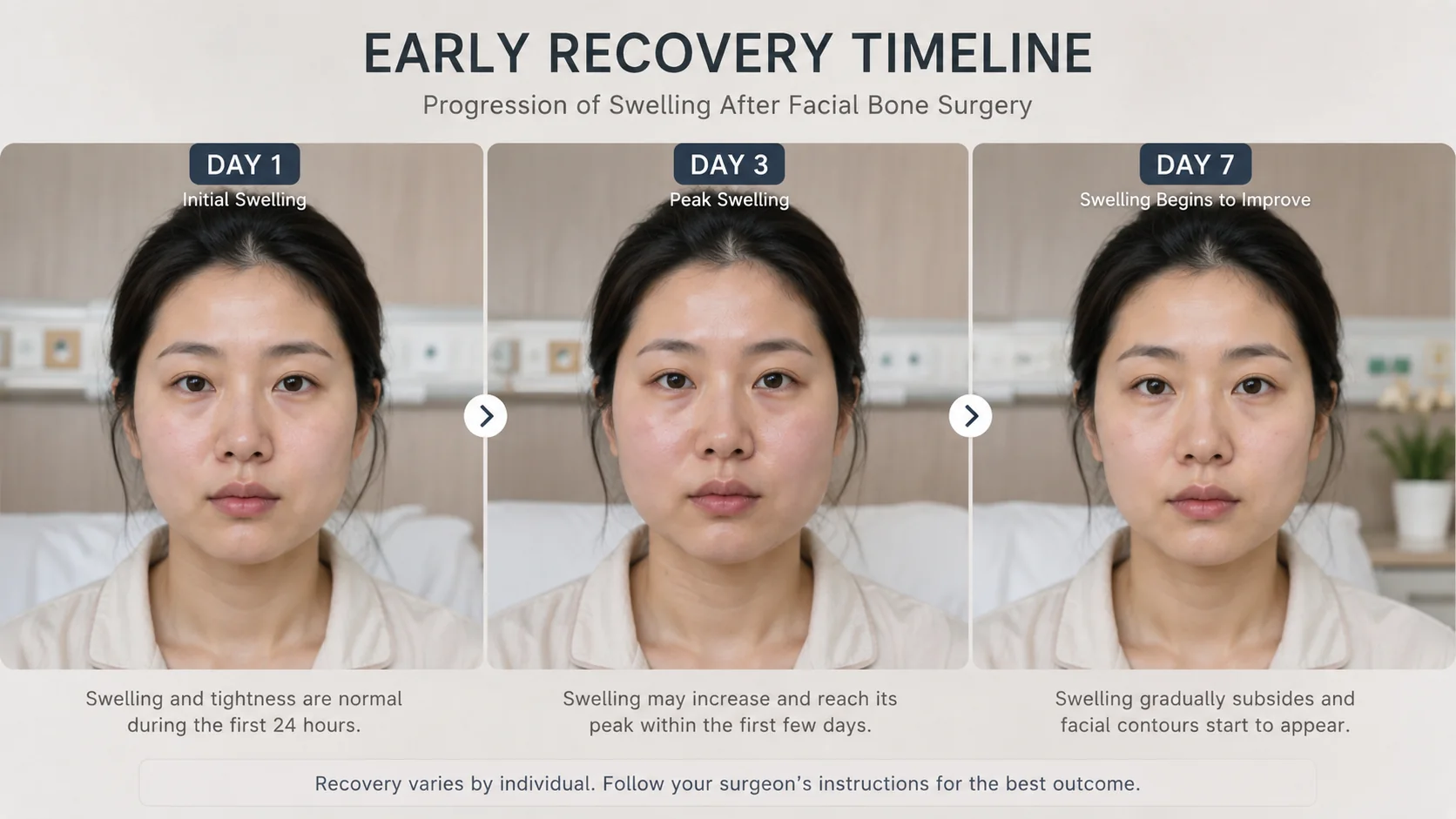
Days 2–3: Swelling May Reach Its Peak
Many patients expect swelling to start improving immediately after surgery.
However, swelling may actually become more noticeable during the first several days.
This is a normal part of the inflammatory response.
During this stage, patients may notice:
- Increased facial fullness
- Puffiness around the eyes
- Cheek swelling
- Jawline swelling
- Bruising
- Facial tightness
For lower-face procedures, the jawline may temporarily lose definition.
This can be surprising for patients who underwent surgery specifically to create a narrower lower face.
The important point is that the early postoperative appearance does not represent the final structural result.
The new skeletal contour is still hidden beneath temporary swelling.
Facial Swelling Can Move
Swelling does not always remain exactly where the surgery was performed.
For example, after forehead surgery, swelling can gradually move downward toward the eyelids and upper cheeks.
After midface or lower-face surgery, swelling may extend into surrounding tissues.
This movement is related to gravity and the way fluid distributes within soft tissue.
As a result, the face may look different from day to day during early recovery.
Patients should avoid judging symmetry or final facial shape at this stage.
The First Week: Healing Becomes the Priority
During the first week, most patients focus primarily on rest and basic recovery.
Daily activity may be limited.
Depending on the procedures performed, patients may need to follow instructions related to:
- Medication
- Oral hygiene
- Facial care
- Diet
- Sleep position
- Physical activity
- Follow-up appointments
Swelling is still present, but it generally begins to stabilize.
Bruising may change color as it resolves.
Patients may also begin noticing that different parts of the face are healing at different speeds.
This is common.
Eating After Jaw or Chin Surgery
Diet is an important part of recovery when surgery involves the jaw, mandibular angles, or chin.
Chewing may feel uncomfortable during the early postoperative period.
Depending on the procedure and surgeon’s instructions, patients may begin with:
- Liquids
- Soft foods
- Easily chewable foods
and gradually return to a more normal diet.
The exact progression varies.
Patients should follow their surgeon’s specific dietary instructions.
Adequate nutrition remains important because the body requires energy and nutrients for healing.
Oral Hygiene After Intraoral Surgery
Some facial bone procedures use incisions inside the mouth.
When this occurs, oral hygiene becomes particularly important.
Patients may be instructed to follow a specific mouth-care routine.
The objective is to keep the surgical area clean while allowing the tissues to heal.
Instructions may include:
- Gentle oral rinsing
- Careful tooth brushing
- Avoiding unnecessary irritation of surgical areas
Patients should follow the postoperative protocol provided by their surgical team.
Sleeping Position During Early Recovery
Many patients are advised to sleep with the upper body elevated during early recovery.
Elevation may help reduce facial swelling and discomfort.
Patients may also be advised to avoid sleeping directly on the face or placing excessive pressure on recently treated areas.
The exact recommendation depends on the operation performed.
The goal is to allow the facial tissues to recover without unnecessary pressure or trauma.
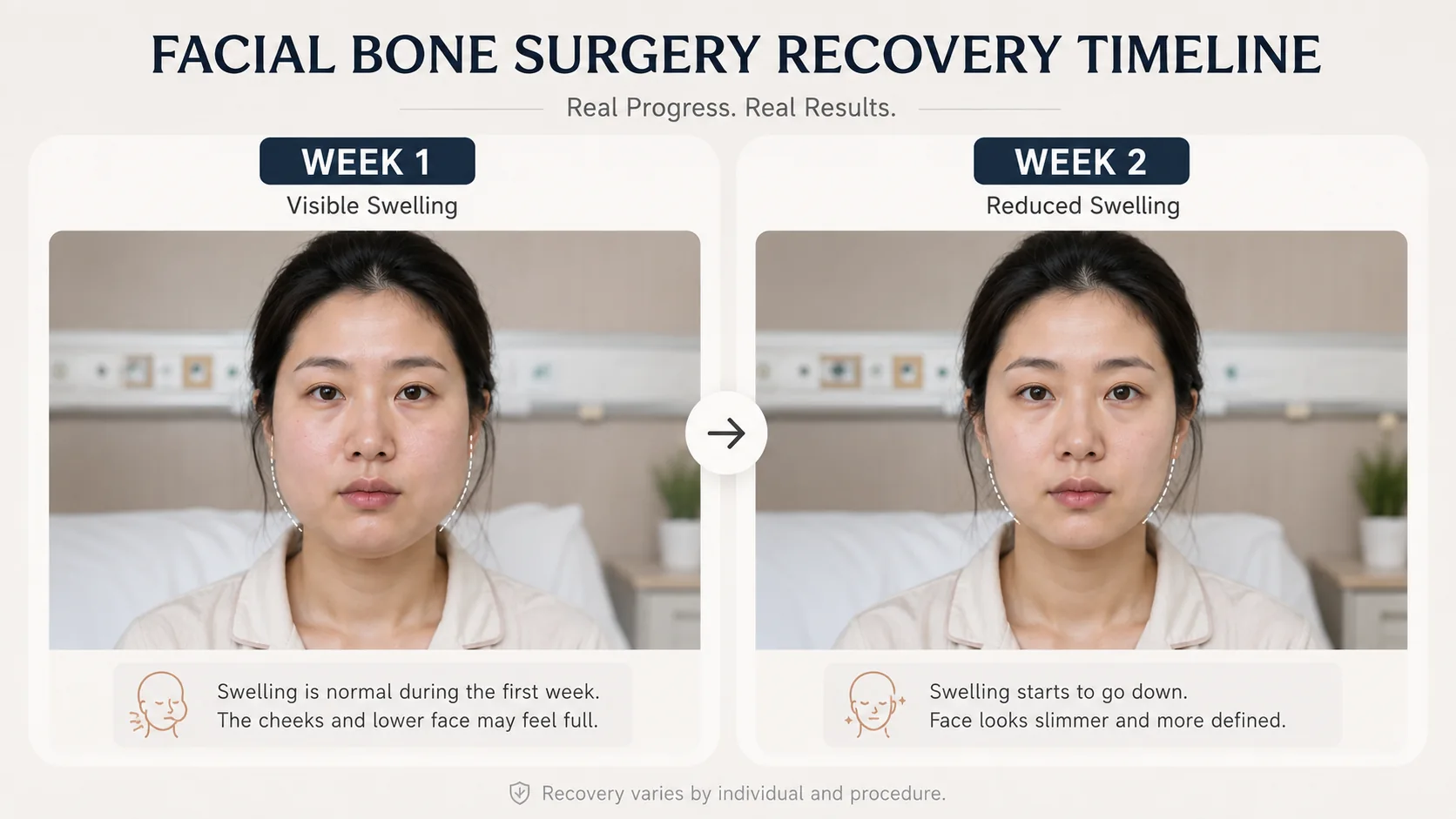
Week 2: The Face Begins to Look More Familiar
By the second week, early swelling often begins to decrease more noticeably.
Patients may start to feel more comfortable returning to light daily activities.
The facial appearance is usually still not final.
However, several changes may become easier to recognize.
Patients may begin noticing:
- Reduced facial fullness
- Improved eye opening after upper-face swelling
- More visible jawline shape
- Clearer chin contour
- Softer facial transitions
At this stage, swelling may still be asymmetric.
One side can temporarily appear fuller than the other.
This does not necessarily mean the underlying skeletal result is asymmetric.
When Can Patients Return to Work?
There is no universal answer.
The appropriate timing depends on:
- Procedures performed
- Amount of swelling
- Bruising
- Type of work
- Patient comfort
- Need for public interaction
Someone working remotely may feel comfortable returning earlier than someone whose work requires frequent face-to-face meetings.
Patients should also distinguish between:
being medically able to work
and
feeling socially comfortable with residual swelling.
These are not always the same.
When Can Patients Exercise Again?
Strenuous activity is generally limited during early healing.
Exercise can increase blood pressure and may worsen swelling or discomfort if resumed too early.
Patients should follow their surgeon’s guidance about gradually returning to:
- Walking
- Light exercise
- Cardiovascular training
- Strength training
- High-intensity activity
Recovery should be progressive.
Feeling better does not necessarily mean the deeper tissues have fully healed.
Weeks 3–4: Facial Definition Becomes Easier to See
During the third and fourth weeks, the face often begins to look more socially natural.
Significant early swelling may have improved.
At this point, patients may begin to see more clearly how the facial structures have changed.
For example:
- Jawline width may appear reduced
- Chin shape may become clearer
- Cheekbone contours may become easier to evaluate
- Forehead transitions may appear smoother
However, subtle swelling can still remain.
This is especially true after extensive facial bone surgery.
Patients should still avoid making final judgments about the result.
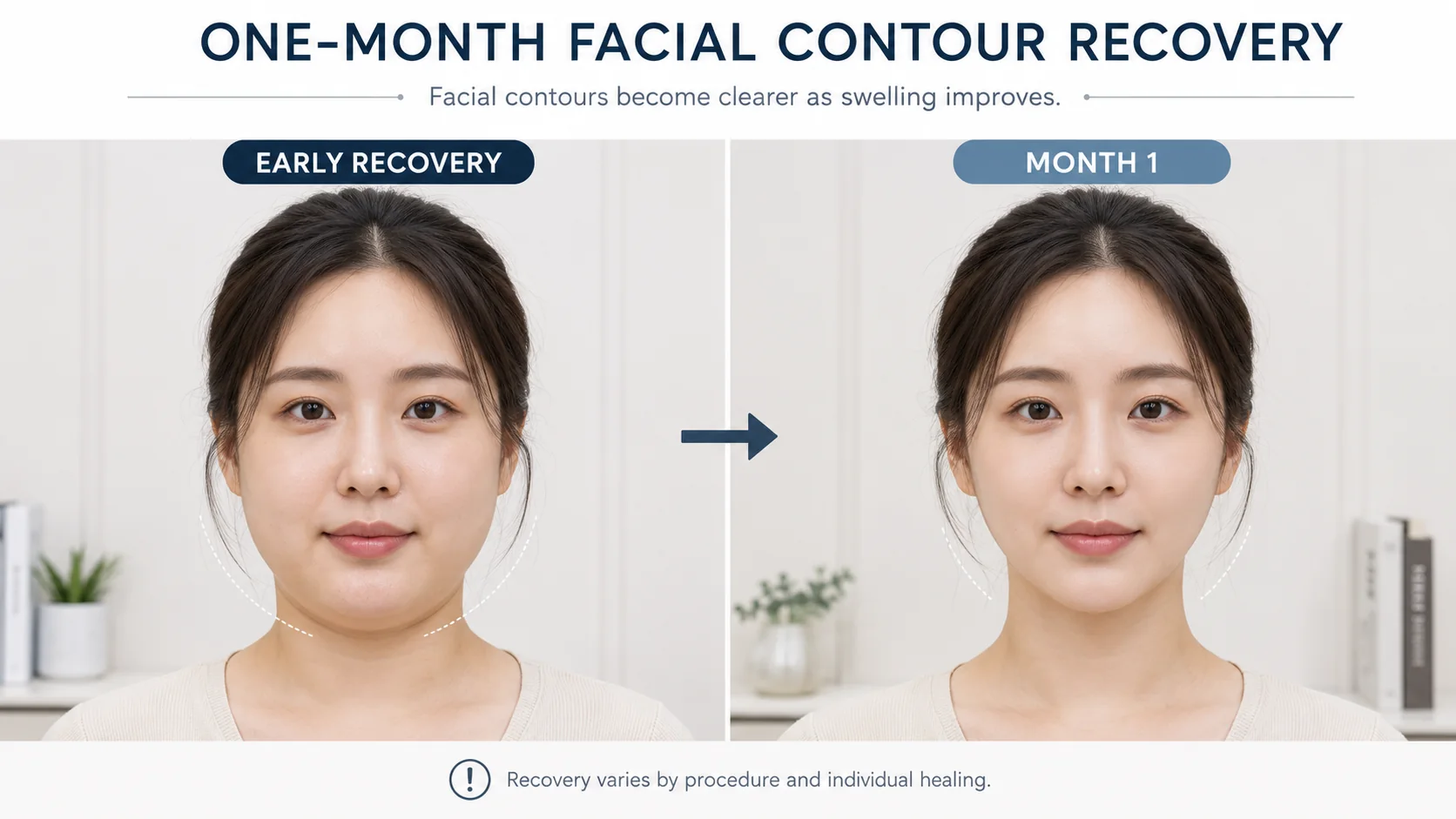
Month 1: The New Facial Shape Starts to Emerge
Around the first month, patients often begin to see the relationship between different treated areas more clearly.
This is an important stage.
Instead of seeing only swelling and individual surgical regions, the patient begins to see the face as a whole again.
For example:
The jawline and chin may begin to form a more continuous contour.
The cheekbones may appear more balanced with the lower face.
The forehead and brow region may look smoother in profile.
This is often when the overall structural change becomes easier to appreciate.
Numbness and Changes in Sensation
Temporary changes in sensation can occur after facial bone surgery.
This is particularly relevant when surgery involves areas where sensory nerves travel close to the bone.
Patients may experience:
- Numbness
- Tingling
- Reduced sensation
- Unusual sensitivity
Common areas can include:
- Forehead
- Scalp
- Cheeks
- Lower lip
- Chin
Sensation may return gradually.
The timeline varies according to the procedure and individual nerve recovery.
Some sensory changes can persist longer.
Specific nerve-related risks should be discussed before surgery.
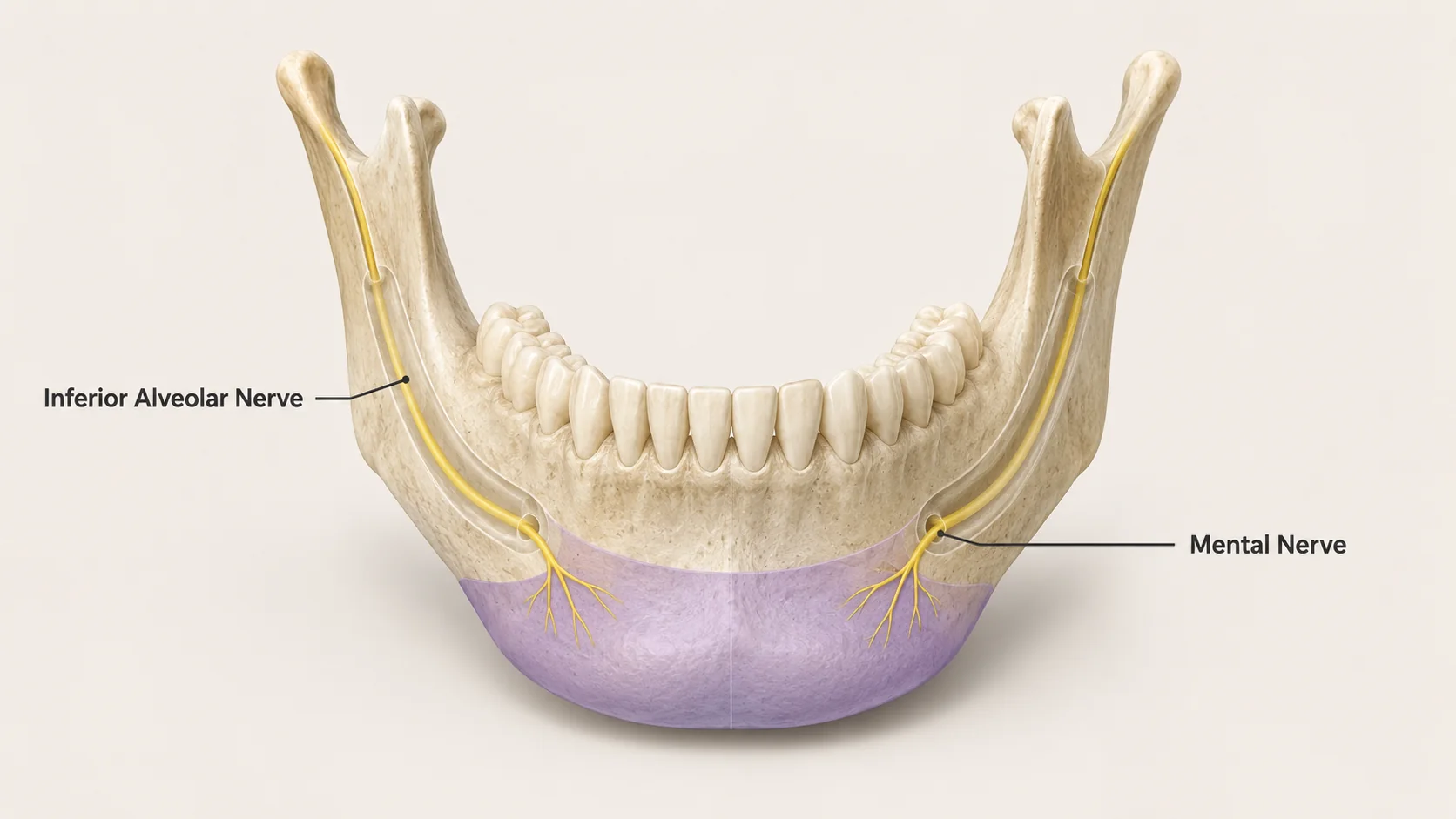
Why the Jaw and Chin Can Feel Numb
The lower jaw contains important sensory nerves.
One of the major nerves in this region is the inferior alveolar nerve, which travels through the mandible.
Its terminal branch, the mental nerve, provides sensation to areas including the lower lip and chin.
Because jawline and chin procedures occur near these structures, careful surgical planning is important.
Temporary altered sensation can occur even when the nerve remains anatomically intact.
Recovery of sensation may take time.
Months 2–3: Residual Swelling Continues to Improve
By the second and third months, much of the obvious swelling may have resolved.
The facial contour generally becomes more defined.
Patients may notice:
- Sharper jawline transitions
- More natural cheek contours
- Better chin definition
- Improved upper-face contour
- More consistent facial symmetry
However, subtle swelling may still remain.
Different surgical regions can continue to heal at different speeds.
This means the face may continue changing even after it looks normal to other people.
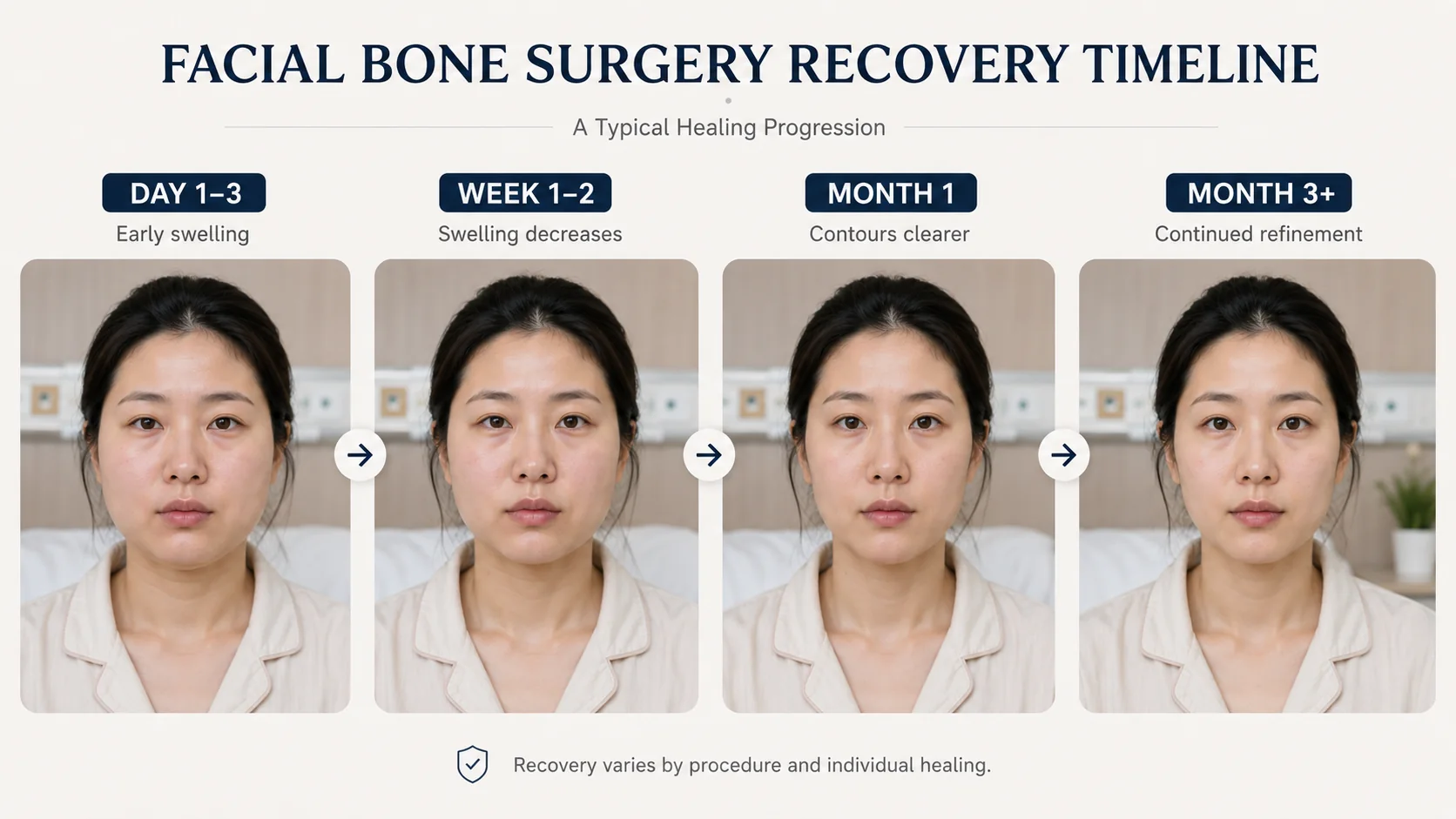
Month 3 and Beyond: Continued Refinement
Long-term healing continues after the early postoperative period.
Residual swelling gradually decreases and the overlying soft tissues continue adapting to the modified skeletal framework.
At this stage, facial contour changes can become more subtle.
Patients may notice improvement in:
- Definition
- Symmetry
- Soft-tissue settling
- Facial transitions
- Overall balance
The final timeline depends on the extent of surgery and individual healing.
Recovery After Different Facial Bone Procedures
Different facial procedures can create different recovery patterns.
Forehead and Brow Bone Surgery
Patients may experience:
- Forehead swelling
- Eyelid swelling
- Bruising
- Scalp or forehead numbness
- Tightness
Swelling may gradually move downward toward the eyes during early recovery.
Zygomatic Contouring
Recovery may involve:
- Midface swelling
- Cheek fullness
- Temporary asymmetry from swelling
- Changes in facial sensation
Midface definition develops gradually as swelling decreases.
Jawline and Mandibular Angle Surgery
Patients may experience:
- Lower-face swelling
- Chewing discomfort
- Temporary numbness
- Reduced jawline definition during early healing
The lower facial contour may take time to become clearly visible.
Chin Surgery
Recovery may involve:
- Chin swelling
- Lower-lip numbness
- Tightness
- Temporary contour irregularity caused by swelling
The relationship between the chin and jawline becomes clearer over time.
Recovery Is Not Always Perfectly Symmetrical
One of the most common concerns during early healing is asymmetry.
Patients may notice that:
- One cheek is more swollen
- One side of the jaw looks wider
- One eyelid looks puffier
- One side feels more numb
Early asymmetry can be caused by differences in swelling rather than differences in the underlying surgical result.
The face should not be evaluated for final symmetry during the early postoperative period.
When Should Patients Contact the Medical Team?
Patients should receive specific postoperative instructions from their surgeon.
Unexpected or concerning symptoms should be discussed with the medical team.
Examples may include:
- Rapidly increasing swelling
- Significant bleeding
- High fever
- Severe or worsening pain
- Difficulty breathing
- New or rapidly worsening symptoms
- Concerns about wound healing
Patients should not rely solely on general online information when they have postoperative concerns.
Their own surgical team should provide individualized guidance.
International Patients: Planning Recovery Before Flying Home
International patients need to plan recovery differently from local patients.
The return flight should not be scheduled too soon after surgery.
Patients may need time for:
- Early postoperative monitoring
- Follow-up appointments
- Dressing or wound checks
- Suture or staple management when applicable
- Swelling evaluation
- Travel clearance
The appropriate length of stay depends on the procedure.
Patients should discuss the expected postoperative schedule before booking fixed return travel.
Flying After Facial Bone Surgery
Long-distance travel introduces additional considerations.
During early recovery, patients may still experience:
- Swelling
- Fatigue
- Discomfort
- Limited eating
- Reduced mobility
Travel plans should therefore prioritize recovery rather than convenience alone.
Patients should follow their surgeon’s advice regarding when air travel is appropriate.
How to Support a Smooth Recovery
Recovery cannot be rushed.
However, following postoperative instructions carefully can support the healing process.
Patients should generally focus on:
- Rest
- Medication compliance
- Appropriate nutrition
- Hydration
- Oral hygiene when required
- Avoiding nicotine
- Avoiding excessive physical activity
- Attending follow-up appointments
Specific instructions vary according to the operation.
The surgical team’s postoperative protocol should always take priority over general advice.
Frequently Asked Questions
The Most Important Rule of Facial Bone Surgery Recovery: Give the Face Time
Facial bone surgery changes the underlying framework of the face.
But the final appearance depends on more than the bone.
The surrounding:
- Skin
- Muscle
- Fat
- Connective tissue
- Nerves
all need time to adapt.
This is why the postoperative face evolves gradually.
The early stage is dominated by swelling.
The middle stage reveals increasing definition.
The later stage is about subtle refinement.
Understanding this process before surgery can make recovery easier to navigate.
The goal is not to judge the face day by day.
The goal is to allow the tissues enough time to heal and reveal the new facial proportions.
Planning Facial Bone Surgery?
A detailed consultation can help you understand:
- Expected recovery for your specific procedures
- How long swelling may last
- When you may return to work
- How long international patients may need to stay
- When follow-up examinations are required
- When travel may be appropriate